German geoparks meet in Kassel to discuss common goals and their visibility
German geoparks meet in Kassel to discuss common goals and their visibility
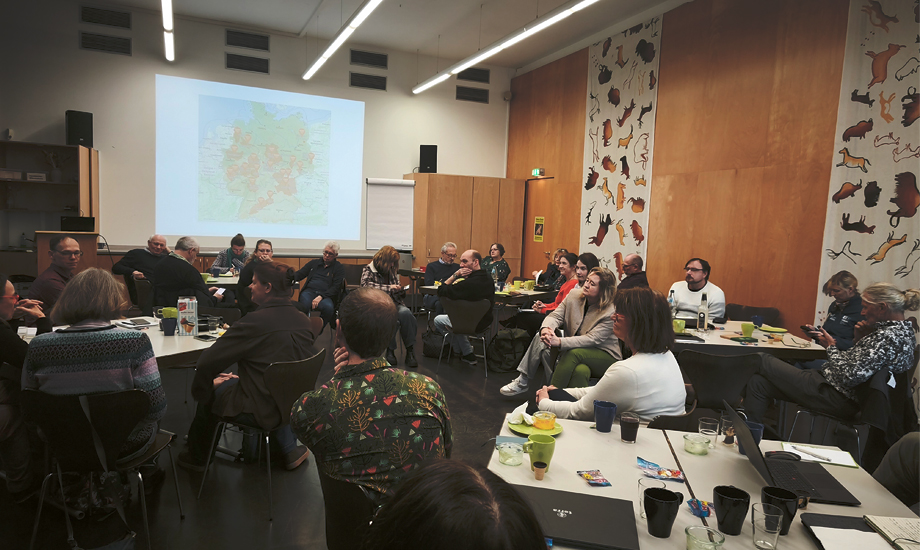
How can Germany’s UNESCO Global Geoparks bring their unique features to life, reach new target audiences, and strengthen their collective presence? The Working Group of German Geoparks (AdG), the German Global Geoparks Network (GGGN), and participants in a workshop on Education for Sustainable Development (ESD) addressed these questions on November 10 and 11, 2026, in Kassel.
On the morning of November 10, the German Global Geoparks Network met at the Kassel Natural History Museum (Ottoneum). The agenda included, among other things, a review of the European Geoparks Conference in Finland, cooperation with the German UNESCO Commission, and the integration of geoparks into climate change adaptation efforts. Preparations for the 2027 International Tourism Exchange (ITB) in Berlin were also discussed. All eight German UNESCO Global Geoparks will be presenting themselves there at a joint booth. Iris Bohnacker and Frederic Blau attended the meetings on behalf of the Swabian Alb Geopark.
ESD Workshop: Telling Stories About Geology, Shaping the Future
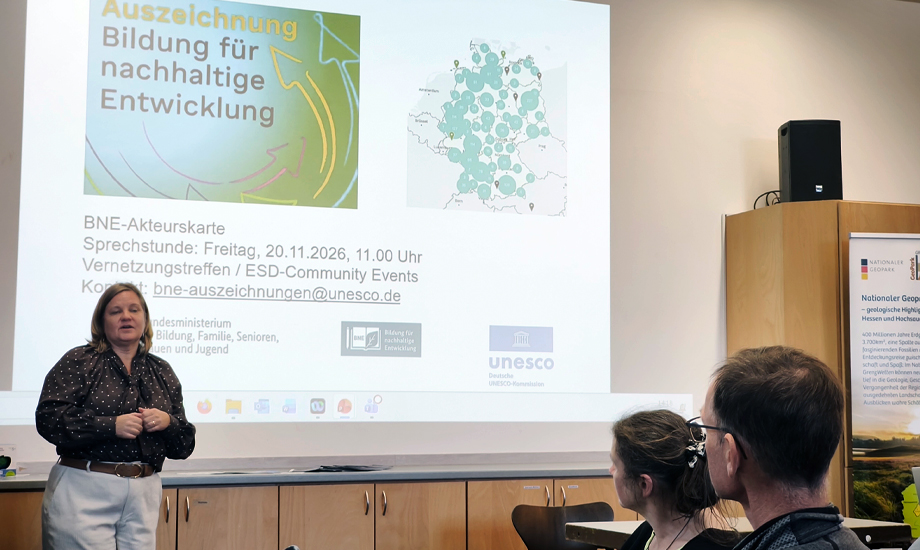
In the afternoon, the two-day workshop “Geology Tells the Story of the Future – Storytelling with ESD in the UNESCO Geopark” began at the Natural History Museum. Bianca Bilgram, Director of the Education for Sustainable Development Office at the German UNESCO Commission, and Gösta Hoffmann, Director of the Geoparks Advisory Office at the German UNESCO Commission, provided expert insights. Examples from the UNESCO Global Geopark Vulkaneifel and the National Geopark Grenzwelten demonstrated how geological content can be linked to issues of sustainable development.
The focus was on storytelling: Stories often stick in people’s minds better than mere facts and information. They create a sense of connection, spark interest, and make complex relationships easier to understand. This offers geoparks the opportunity to link their geological features to people’s everyday lives and to convey aspects of sustainable development in a vivid way.
On the second day of the workshop, participants worked in groups to develop their own ESD activities. One starting point, for example, was an everyday object: hiking boots. This allowed for various stories to be told – ranging from the origin of the materials and working conditions during production to durability and repairability. The exercise illustrated how even everyday objects can be used to shed light on broader contexts and to link ecological, social, and economic issues.
AdG Fall Meeting: Focus on Joint Public Relations Efforts
On the afternoon of November 11, the Working Group of German Geoparks convened for its fall meeting. In addition to reports from the regions and current issues regarding certification, the meeting focused on joint public relations efforts and public perception of the National Geoparks. A detailed baseline analysis prepared in advance identified three key areas for improving external communication: linking geological features more closely to visitor experiences, targeting specific audiences more effectively, and enhancing joint visibility through digital networking and collaborations with tourism partners.
The meetings in Kassel demonstrated how important it is to jointly communicate the geoparks’ technical work, their educational offerings, and their regional characteristics to the outside world – so that their significance for people, nature, and sustainable development is recognized even more strongly.