18. Geopark-Konferenz in Saimaa: Austausch über die Zukunft der Geoparks
More than 400 participants from 32 countries gathered from September 16 to 18 at the 18th International Conference of the European Geoparks Network (EGN) in the Saimaa UNESCO Global Geopark in eastern Finland.
Under the guiding principle “Lifelong learning, shared innovations, sustainable development, and cooperation as a basis for developing geoparks,” the focus was on how geoparks, as spaces for learning and living, can contribute to sustainable regional development. At the 18th International Conference of the European Geoparks Network (EGN), presentations, workshops, and parallel sessions addressed topics including climate change and disaster preparedness, sustainable tourism, communication, research, and education, as well as collaboration among geoparks, local governments, academia, and the business sector.
International Networking and GeoFair
Another focus was on collaboration among European geoparks. For Iris Bohnacker and Teresa Mangold from the UNESCO Global Geopark Schwäbische Alb, the conference offered numerous opportunities to exchange ideas with colleagues from other European geoparks and to gain new inspiration for their work in the Schwäbische Alb. The field trips also demonstrated how geological heritage can be linked to culture, history, education, and regional attractions—thereby providing further inspiration for geopark work.
At the GeoFair, geoparks presented their regions, cultural highlights, educational programs, and geotourism products. The exhibition was also open to students and the local community. In this way, the conference combined international professional exchange with regional outreach efforts.
Danube GeoTour Plus: Cross-Border Collaboration
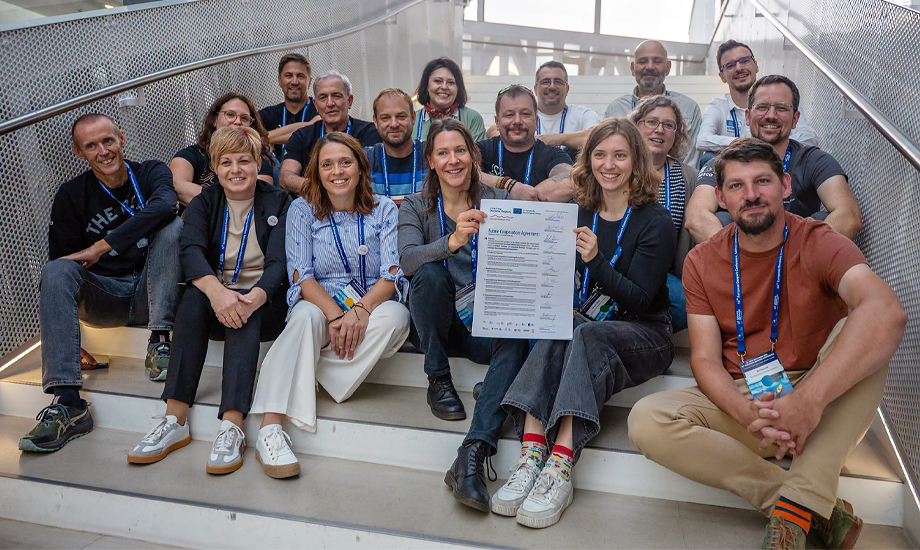
The Interreg Danube GeoTour Plus project was also part of the international exchange. For the UNESCO Global Geopark Schwäbische Alb, the conference provided an opportunity to discuss further collaboration and the long-term prospects of the project. The recently signed Future Cooperation Agreement is intended to ensure that the collaboration among 11 project partners from nine countries continues even after the end of the EU funding period (at the end of 2026). The focus is on sustainable geotourism, common quality standards, visitor management, and knowledge transfer.
Experience Geology, Nature, and Culture Together
The host, the Saimaa UNESCO Global Geopark, impressively demonstrated how closely geology, nature, culture, and everyday history can be intertwined. The excursions took participants to, among other places, glacially shaped landscapes featuring ridges, drumlins, and boulders; Stone Age archaeological sites and rock paintings; as well as the Saimaa Canal and the historic Salpalinja defense line.
Lappeenranta – Conference Venue
Lappeenranta is located on the shores of Lake Saimaa — Finland’s largest lake, whose expansive landscape is characterized by water, forests, and some 14,000 islands. The city places a strong emphasis on sustainability and innovation and has been recognized for its commitment with awards such as the EU Green Leaf City Award. As “Finland’s Climate Capital,” Lappeenranta focuses on sustainable technologies, renewable energy, and carbon-neutral operations.