Climate research in the classroom: Soil sensors bring soil to life
Climate research in the classroom: Soil sensors bring soil to life
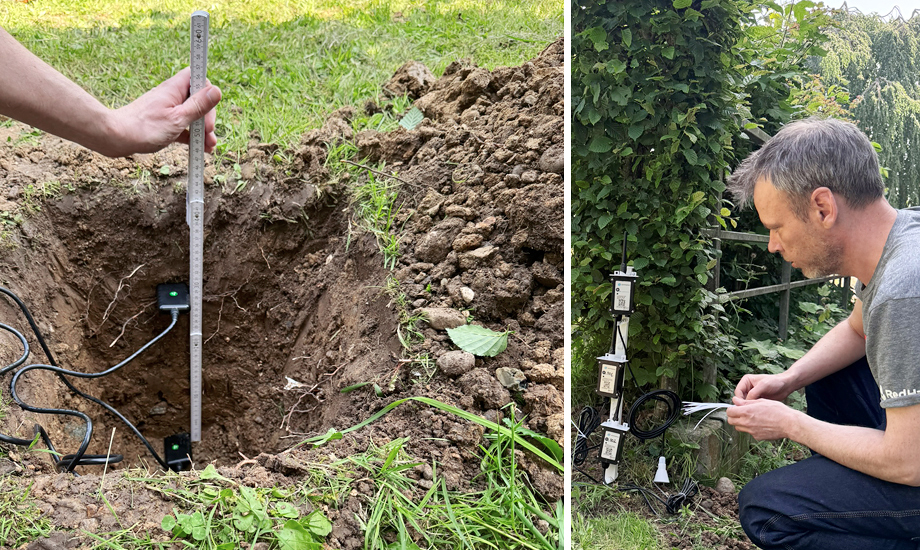
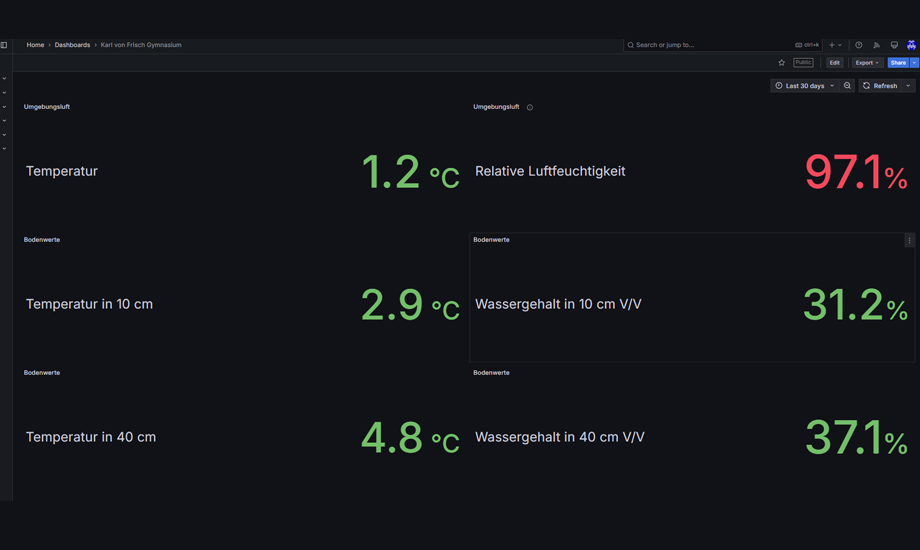
Several geopark schools in the UNESCO Global Geopark Swabian Alb were equipped with modern soil sensors in the summer, which are designed to give students a hands-on experience of climate research – right in the school garden. The sensors record temperature, relative humidity, soil moisture, and soil temperature at depths of 10 and 40 centimeters. The data is collected in open-source software that can be used to analyze metrics and data from applications across platforms.
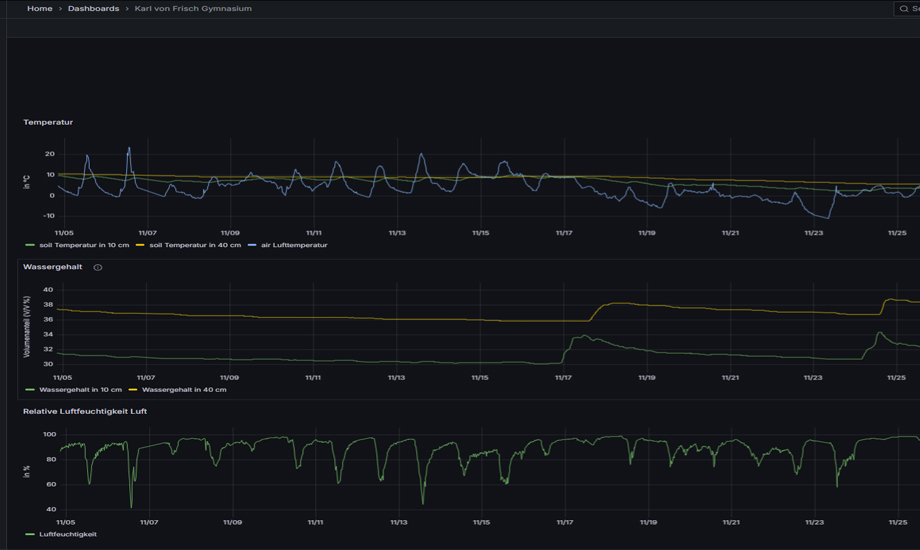
The Karl von Frisch Gymnasium in Dußlingen provides a clear example of the insights gained so far from using the sensors. Even though the soil sensor display has not yet been integrated into the school network or website, teacher Matthias Friederichs is already making intensive use of the new possibilities in his advanced geography course: “I have incorporated and used the data in my lessons. We have derived climate-geographical references from the measurement series of the soil sensors.”
The period during the summer holidays was particularly revealing. “We saw that despite some periods of rainfall, the water often only seeped into the top few centimeters of the soil. At a depth of 40 centimeters, the soil remained very dry – exactly what we had previously determined from soil profile analyses. The sensors provide data series that go far beyond a mere snapshot when taking a soil profile.”
The class also used the sensors to explore atmospheric topics in greater depth: “We used the temperature sensor above the turf to analyze radiation and heating aspects throughout the day. Together with the relative humidity, we were even able to track the dew point and repeat the concept.” His conclusion: “It worked really well.”
The citizen science project was initiated by the UNESCO Global Geopark Swabian Alb in cooperation with os4os – open science for open societies. The aim is to make the effects of climate change visible in the classroom and to open up new avenues of research-based learning. At the same time, a growing network of geopark schools is emerging that shares knowledge and closely links education, science, and climate protection.
Further information: