Zaininger Hüle: 40th geopoint of the UNESCO Geopark Swabian Alb
Zaininger Hüle: 40th geopoint of the UNESCO Geopark Swabian Alb
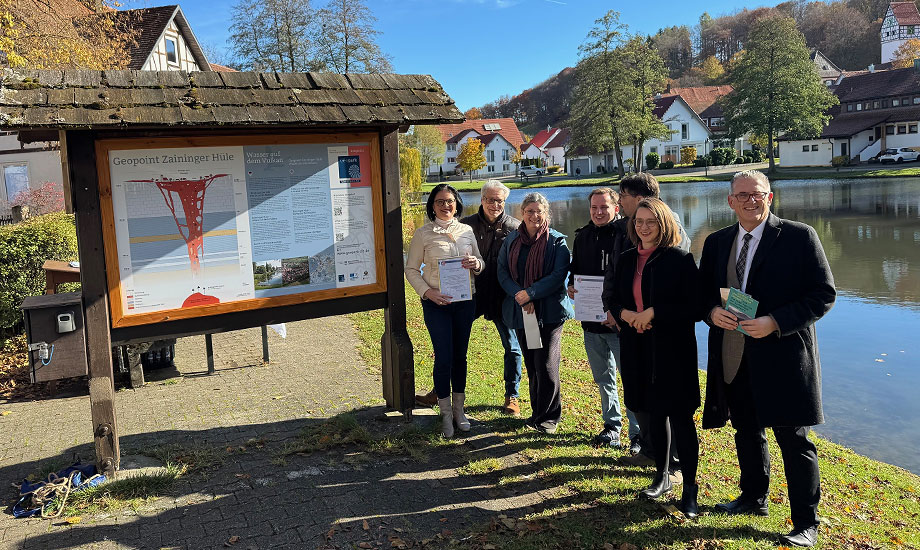
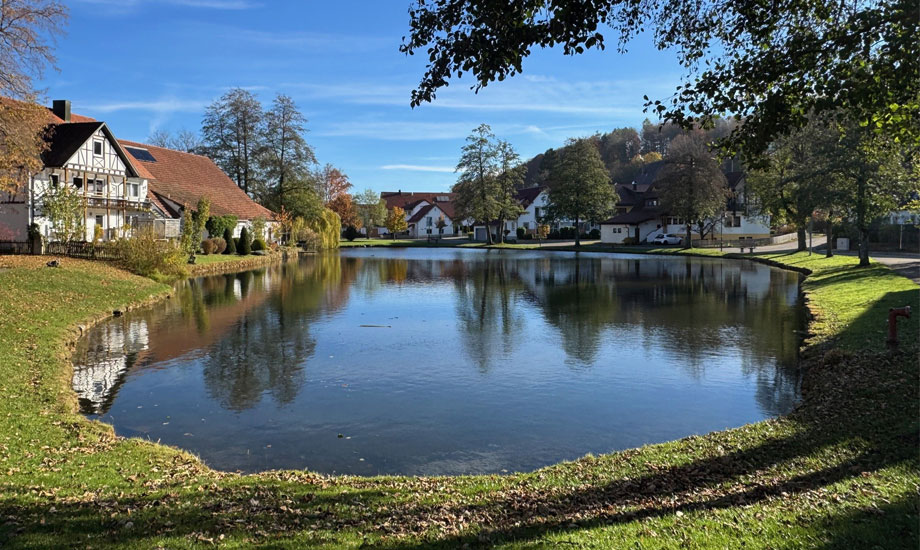
On October 29, the "Zaininger Hüle" was officially inaugurated as a geopoint of the UNESCO Global Geopark Swabian Alb in the center of Römerstein-Zainingen. The small pond is not only a natural monument, but also a geologically and culturally significant place where visitors can experience the formation of the Alb landscape up close.
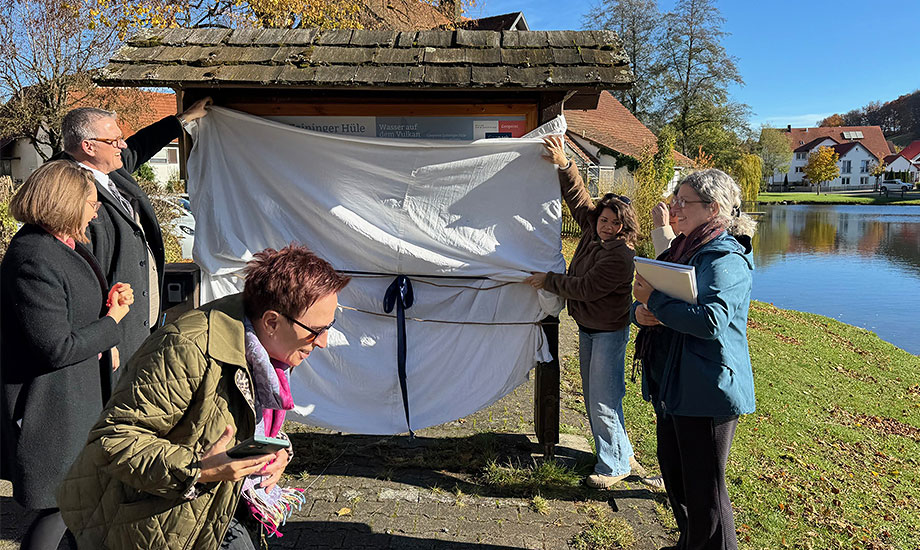
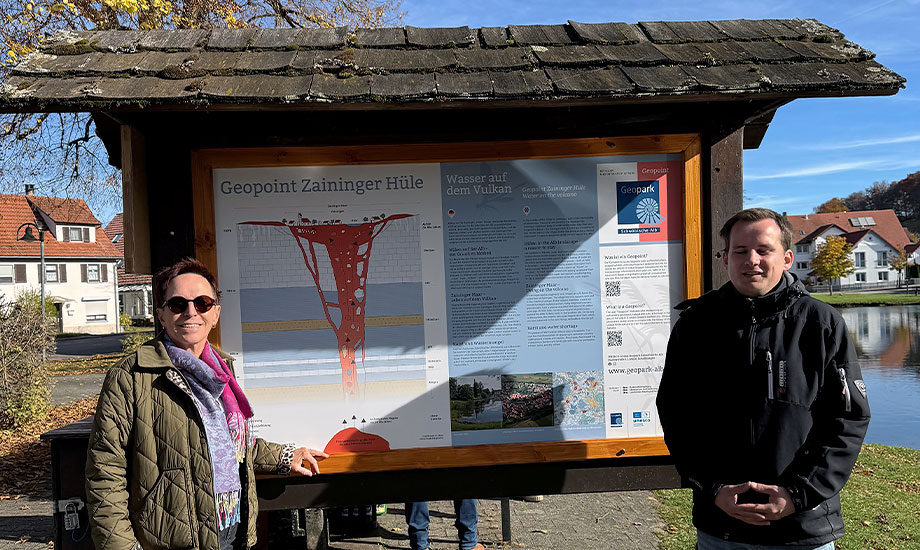
In glorious autumn weather, regional representatives from politics, business, and the local administration of Zainingen came together to unveil the new geopoint sign. This replaces the previous, weathered display board and now provides bilingual information about the special features of the Hüle. QR codes take visitors directly to further information on the Geopark website and to other Geopoints in the Swabian Alb.
Member of the Bundestag Michael Donth (CDU) was delighted about the award for a place that is close to his heart – he himself lives in Zainingen: “You can only protect what you know – and the geopark opens our eyes to the special landscape in which we live.” He recalled that the Hüle has always been a place of special significance for the people of Zainingen. “The fact that the international community recognizes the UNESCO Global Geopark Swabian Alb as one of only 229 worldwide is a significant sign,” emphasized Donth. “We Alb residents can be proud of our five international premium labels from UNESCO.”
Greta Schirmer-Förster, Chief Administrative Officer of the Reutlingen district, also emphasized how closely the lives of the people in the Alb region are linked to geology and praised the commitment of all those involved. They all contribute to the sustainable development of the Swabian Alb. “The Geopark invites us to see the landscape with new eyes – and geology and sustainability play a major role in this.” She also remembered her recently deceased predecessor Hans-Jürgen Stede, former chairman of the Geopark, who had been passionately committed to sustainability. “We are proud to play a special role nationally and internationally as a district with a total of three UNESCO Geopark geopoints.”
Anja Sauer, mayor of the municipality of Römerstein, emphasized that Zainingen is a place of encounter, of coming together, and of living community. “Our Hüle has always been the center of the village—a place of provision, exchange, and encounter,” she said. “Traditions such as the ‘Hülenzauber’ or the ‘Hülen-Hockete’ show that community and sustainability are firmly anchored here,” said Sauer. The fact that the Zaininger Hüle is part of the UNESCO Global Geopark Swabian Alb means much more than just a plaque by the side of the road. “The Geopark is an international network that combines geological history, education, and sustainable development – and we are proud to be part of it.”
Ulrich Ruckh, CEO of the Geopark, pointed out that the Swabian Alb accounts for around 20 percent of the state of Baden-Württemberg's total area. “The UNESCO Global Geopark, which covers almost the entire Alb region, plays an important role as an investment area for education and sustainable development,” he emphasized. He expressed special thanks to the German Industrial Association of Stones and Earths (ISTE), represented by Dieter Rösch. The association is an important partner of the Geopark, he said, because sustainability also means using the region's raw materials responsibly and thereby creating new livelihoods and jobs. “The Hüle is part of our reality,” he concluded. “It stands for identity – and for noticing things that you might overlook at first glance.”
The Zaininger Hüle was formed on a former volcanic vent. Rainwater collects on the impermeable volcanic rock and has formed the pond that exists today. Until 1921, the Hüle served as a reservoir for industrial water and a watering place for livestock. Today, it is a protected geotope that impressively combines the geology, history, and culture of the Alb.
With the Zaininger Hüle, the UNESCO Global Geopark Swabian Alb now has 40 geopoints where visitors can experience the geological diversity of the region.