Hausener Wand
Hausener Wand
Where the Alb reveals its inner world
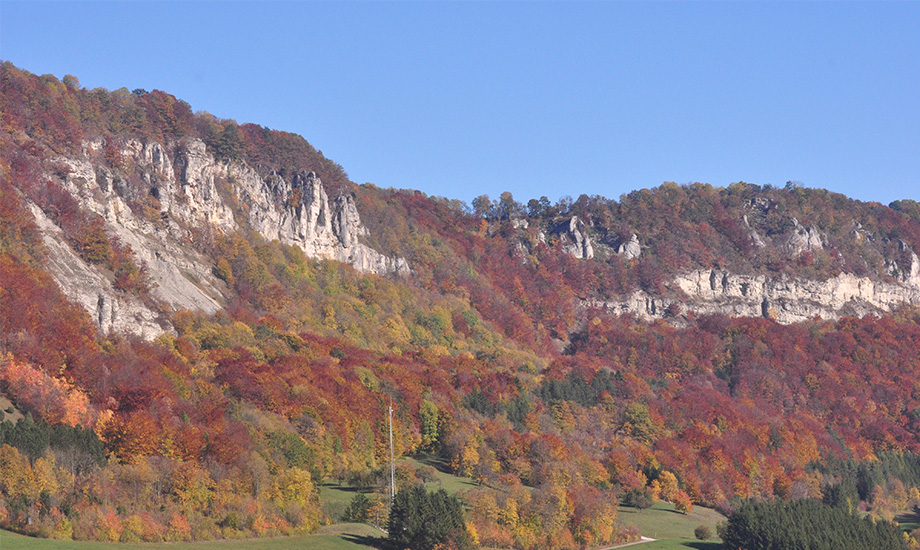
The striking white cliffs of the Hausener Wand rise about 250 meters above the Filstal valley. The view from the summit plateau is spectacular, but what makes this place truly unique is the view from below: the cliff face, which stretches for about one kilometre, offers an exceptional insight into the geological structure of the Swabian Alb.
Layer by layer, the cliff reveals the structure of the Albtrauf, the steep northwestern escarpment of the Swabian Alb, formed by the limestone and marlstone of the Upper Jurassic (White Jurassic). It tells the story of a time more than 150 million years ago, when a tropical Jurassic Sea covered this area. Marlstone consists of limestone and fine clay particles. Marl-rich sequences weather more rapidly and therefore form the less steep, scree-covered sections of the cliff. Thanks to this outstanding geological exposure, the site even contains the so-called type locality of the Lacunosamergel Formation. In contrast, where bedded limestones predominate the cliff rises steeply in a wall-like formation. Higher up, the bedded limestones transition into massive limestone, reflecting the growing abundance of sponge reefs in the Jurassic Sea at that time.
The rocks of the Albtrauf are particularly susceptible to landslides. Water-permeable, fractured limestones alternate with impermeable marlstones, which weather into clay-rich material and, when saturated with water, form slippery layers along which landslides can occur. Towards the end of the last Ice Age in particular, major climatic changes triggered numerous landslides, flow processes and rockfalls along the steep slopes of the Albtrauf, especially in the upper Filstal valley.
The cliffs of the Hausener Wand are also the result of these processes. Around 13,000 years ago, a major landslide occurred here. A huge section of the Albtrauf broke away and slid down into the valley in the form of several large rock masses, reaching as far as the present course of the River Fils. The Hausener Wand marks the original landslide scarp. Terraces and changes in slope below the cliff still trace the outlines of the landslide blocks today. Numerous massive limestone boulders beneath the cliff also bear witness to rockfalls that occurred after the landslide, when sections of the now unstable cliff broke away.